


Psychosocial Hazards & Risks
Psychosocial hazards are elements of an environment, a workplace, a school, or a home, that are hazardous to your psychological wellbeing, risking psychological stress, strain, and burnout.
Psychosocial hazards are elements of work design, management, and social context that can cause psychological harm. In Australia, employers now have a "positive duty" to manage these risks with the same rigor as physical safety. This an important step for the world of work in terms of regulations and guidelines, because this means that employment law is catching up with what we have known for quite a while in the psychology and research space: that psychological stress and strain that is driven by psychosocial hazards in the work environment carries risks for psychological injury, which in turn creates risks to physical and cardiovascular and brain health, and can be life threatening.
The concept of psychosocial hazard steps beyond the idea of generically 'stressful' moments in the workplace, which are commonplace, and focuses moreso on elements of the way that the work environment or the work itself is actually designed andf set up. Like having a boss who never gives feedback, or a workload that never ends. Managing this means creating a space where you can actually breathe and do your best work, according to what we know about the performance and wellbeing of human beings.
Example: A legal team with chronic "Work Overload" and zero "Role Clarity". Mapping these hazards prevents burnout and ensures compliance with WHS laws.
Example: Constantly being directed to do two people's jobs, with no appreciation. This increases demands, while actively removing the control over task required to manage the stress of further demands.
In Australia, model laws were developed at the national level, along with model regulations and a model code of practice with state jurisdictions harmonising these frameworks locally within each of their own specific WHS/OHS laws through amendments and updates to the legislation, each with associated codes and regulations published.
The Safe Work Australia model framework for psychosocial hazards articulates 14 separate hazards, that are found to directly influence outcomes such as psychological strain, risks for the development of burnout, and physical symptoms related strain:
Job Demands - (High) High job demands means high levels of physical, mental or emotional effort are needed to do the job. (Low) Low job demands means sustained low levels of physical, mental or emotional effort are needed to do the job.
Low Job Control - Low job control means workers have little control or say over the work. This includes over how or when the job is done.
Poor Support - Poor support means not getting enough support from supervisors or other workers, or not having the resources needed to do the job well.
Lack of Role Clarity - Lack of role clarity means workers aren’t clear on their job, responsibilities or what is expected. This may happen when they aren’t given the right information or things keep changing.
Poor Organisational Change Management - Poor organisational change management means changes that are poorly planned, communicated, supported or managed.
Inadequate Reward and Recognition - Inadequate reward and recognition means there is an imbalance between the effort workers put in and the recognition or reward they get. Reward and recognition can be formal or informal.
Poor Organisational Justice - Poor organisational justice means a lack of: procedural justice (e.g. fair decision making processes) | informational fairness (e.g. keeping everyone up to date and in the loop), or | Interpersonal fairness (e.g. treating people with dignity and respect).
Traumatic Events or Material - Witnessing, investigating or being exposed to traumatic events or materials is a psychosocial hazard.
Remote or Isolated Work - Remote or isolated work means work that is isolated from the assistance of others because of the location, time or nature of the work. It often involves long travel times, poor access to resources, or limited communications.
Poor Physical Environment - A poor physical environment means workers are exposed to unpleasant, poor quality or hazardous working environments or conditions.
Violence and Aggression - Workplace violence and aggression is when a person is abused, threatened or assaulted at the workplace or while they’re working. It can cause both physical and psychological harm, making it a risk to health and safety.
Bullying - Workplace bullying is repeated, unreasonable behaviour directed at a worker (or group of workers).
Harassment (including sexual harassment) - Harassment due to personal characteristics such as age, disability, race, nationality, religion, political affiliation, sex, relationship status, family or carer responsibilities, sexual orientation, gender identity or intersex status. Sexual harassment is defined as any unwelcome sexual advance, unwelcome request for sexual favours or other unwelcome conduct of a sexual nature, in circumstances where a reasonable person, having regard to all the circumstances, would anticipate the possibility that the person harassed would be offended, humiliated or intimidated.
Conflict - Aggressive communication and disagreement between two people, or groups of people.
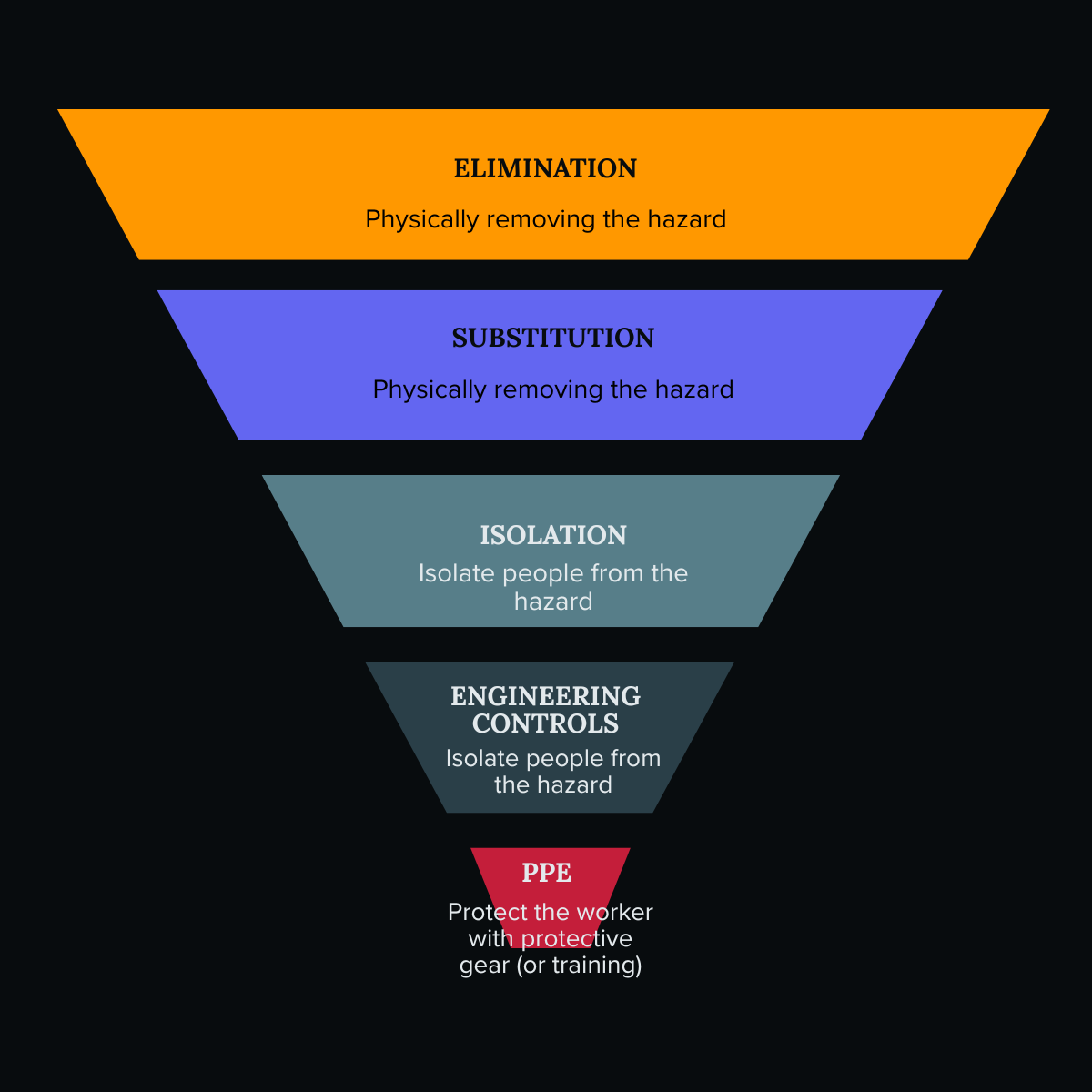
Safe Work Australia outlines different approaches to managing risk in the workplace, and recommends doing so by following the cyclical risk management process of identifying the hazards, assessing their risks, controlling those risks, and reviewing the effectiveness of the control measure. It is recommended that control measures for psychosocial hazards and risk be chosen and applied according to the Heirarchy of Control:
- Elimination (Most Effective): Completely remove the hazard or hazardous task from the workplace.
- Substitution: Replace the hazardous material, process, or equipment with a less hazardous alternative.
- Engineering Controls: Isolate people from the hazard or use physical modifications to reduce risk.
- Administrative Controls: Change the way people work to minimise exposure to the hazard.
- Personal Protective Equipment (PPE - Least Effective): Provide individuals with specialised gear to protect them from the hazard.
Research findings
Overview of workplace psychosocial hazards - Safe Work Australia
14 most common psychosocial hazards outlined and explored