


Psychological safety
Psychological safety refers to how 'safe' people tend to find it to be wholly themselves in their environment. That is to say, they can fully be themselves, ask questions, bring and share ideas, ask questions, and make mistakes without fear of humilation or punishment. It is also the second lever of performance.
Psychological safety has recieved much attention in recent timers, with the research body, and understanding of the concept, growing. It is seen to have a significant impact on human performance.
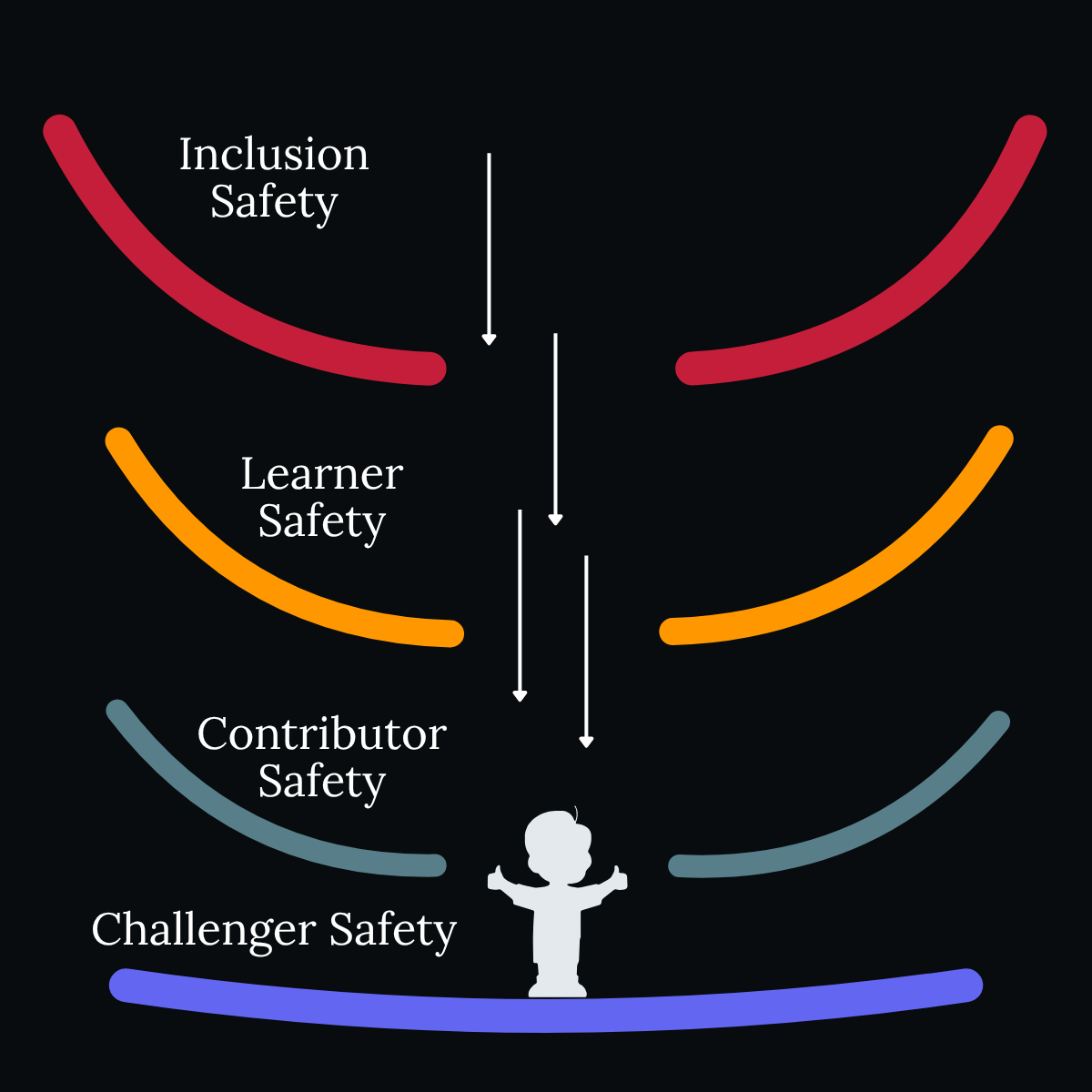
It is now commonly understood in terms of 4 distinct stages of psychological safety:
Inclusion safety - Feeling safe to be accepted as a unique member of the group
Learner safety - Feeling safe to ask questions, give and receive feedback, and make mistakes
Contributor safety - Feeling safe to use your skills to make a meaningful, independent impact
Challenger safety - Feeling safe to speak up, dissent, or suggest major changes without retaliation
Psychological safety is sometimes confused with, but is also strongly related to, psychosocial safety and the concept of psychosocial hazards.
With improvements in psychological safety, we tend to find improvements in:
- innovation
- error prevention
- high performance
Research findings
4 Stages of Psychological Safety outlined - (Clark 2020)
4 stages of psychological safety outlined, including inclusion safety, learner safety, contributor safety, and challenger safety.
https://www.scirp.org/reference/referencespapers?referenceid=2876728